
A well-planted urban garden can sustain bee forage from late February through October in Czech conditions. The key is sequencing flowering times so that something is always available — early bulbs and willows carry colonies through the hungry spring gap, summer perennials provide the main nectar surplus, and late-season asters and sedums extend the harvest into autumn. Plant diversity matters as much as quantity: monoculture plantings of a single species create boom-and-bust forage cycles, while mixed plantings deliver more consistent pollen and nectar across the season.
Spring Flowering Plants (February – May)
Spring plants are critical. After winter, a colony's food stores are at their lowest point and queens are beginning to lay. Colonies that cannot find adequate early pollen for brood rearing can stall their development by weeks.
Snowdrop (Galanthus nivalis)
Native to Czech and Carpathian regions, snowdrops bloom from late January to early March depending on the year. They provide pollen on the first warm days above 8°C, which can coincide with the first foraging flights. Plant in drifts under deciduous trees or along the edges of raised beds where they naturalise easily without maintenance.
Crocus (Crocus tommasinianus and C. vernus)
The species crocus C. tommasinianus flowers ten days earlier than garden varieties and provides significant pollen in purple-orange anthers. It self-seeds freely in lawns and between paving stones. Planted at 50–100 bulbs per square metre in a sunny spot, it creates a reliable early-March forage patch even in small Prague courtyards.
Lungwort (Pulmonaria officinalis)
Lungwort flowers from late March and produces nectar accessible to both short-tongued honeybees and long-tongued bumblebees. It tolerates partial shade, making it useful beneath urban tree canopy where other flowering plants struggle. The pink-to-blue flower colour change as blooms age is a documented visual cue that experienced foragers recognise and respond to.
Willow (Salix spp.)
Any willow species — including the common weeping willow and the native goat willow (Salix caprea) — produces abundant pollen and nectar in early April before most garden plants are active. Urban beekeepers near Prague's river parks or Stromovka report significant pollen income from willows that helps trigger brood expansion in time for the fruit tree bloom that follows.
Early Summer Plants (May – June)
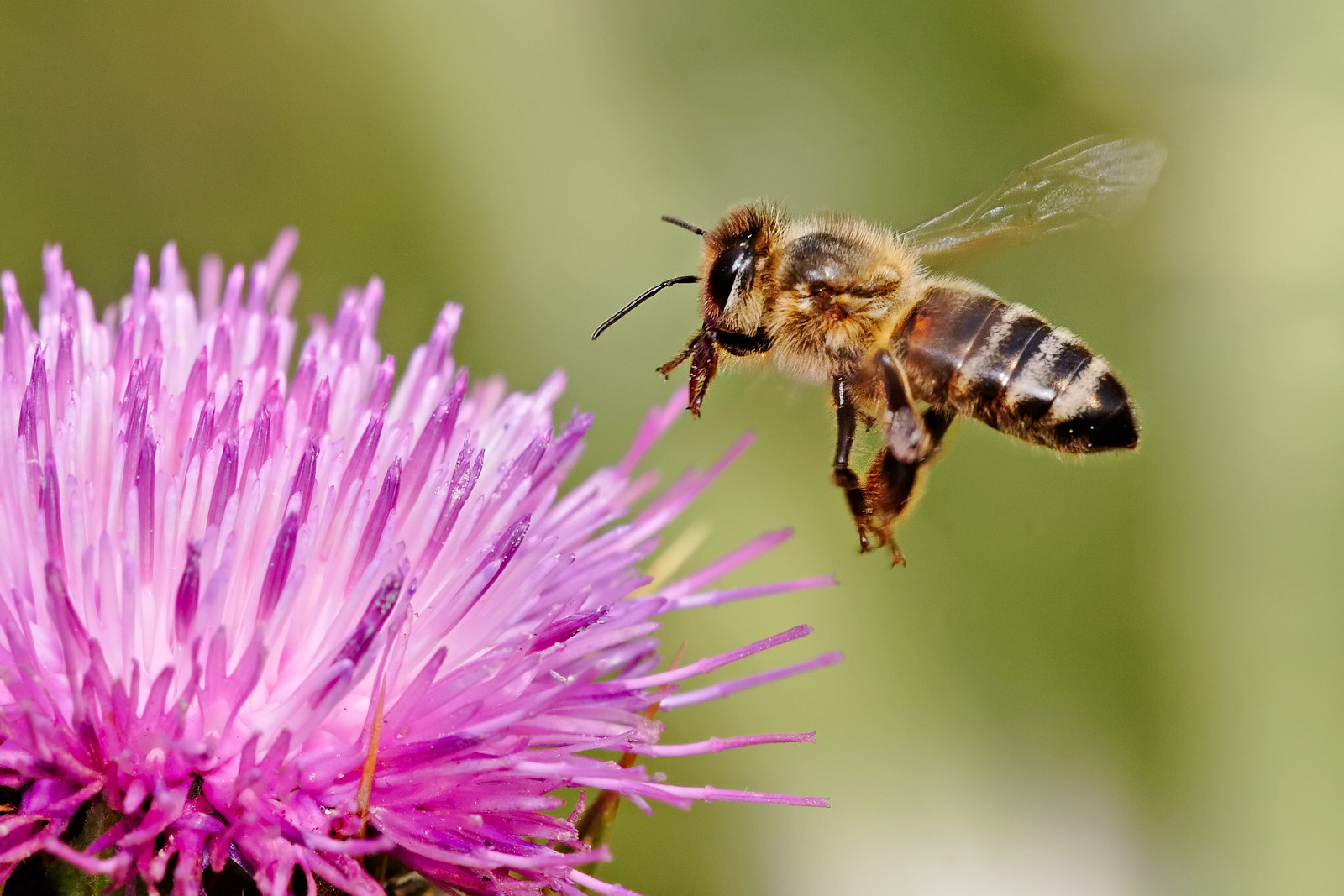
Borage (Borago officinalis)
Borage is one of the most consistent nectar producers in Czech summer conditions. Each blue star-shaped flower refills with nectar every 1–2 minutes, making a small borage patch effectively a continuous foraging resource during peak summer. It is an annual that self-seeds aggressively — plant once and it will return each year without intervention. Grows well in containers and raised beds.
Phacelia (Phacelia tanacetifolia)
Phacelia is frequently grown as a green manure crop in Czech agriculture, but it also performs well in urban garden strips and borders. Honeybees can forage its nectar at lower temperatures than most summer plants, and it flowers over a 6–8 week period from a single sowing. Broadcast on bare soil in April at 1–2 g per square metre for a dense stand.
White Clover (Trifolium repens)
A standard lawn component in Czech parks, white clover is one of the most significant nectar sources for managed hives. Allowing a portion of urban lawn to go uncut for 3–4 weeks in June enables clover to flower fully before the next cut. The nectar yield per flower is modest but the total area of urban clover across Czech city parks represents a substantial collective forage base.
Catmint (Nepeta × faassenii)
Catmint is both drought-tolerant and highly attractive to bumblebees and honeybees. It flowers from May to September with a second flush if cut back after the first bloom. The low maintenance requirement makes it suitable for exposed rooftop beds where irrigation is limited. Czech commercial varieties such as 'Walker's Low' reach 60–80 cm and are widely available from garden centres in Prague and Brno.
High Summer Plants (July – August)
July is the linden bloom period in Czech cities — the single largest urban nectar source for managed hives. But the window is short (two to three weeks) and gardens should provide supplementary forage.
Lavender (Lavandula angustifolia)
Lavender in Czech conditions requires a sheltered spot with excellent drainage and full sun, but where these conditions exist it is one of the most reliable mid-summer bee plants. The dense spikes carry both nectar and pollen. Czech winters can kill lavender in exposed positions; planting against south-facing walls or in raised beds with gravel mulch significantly improves overwintering survival.
Echinacea (Echinacea purpurea)
Coneflower blooms from late June to September and provides significant pollen for late-season colony building. The large flower heads attract both honeybees and a range of native solitary bees. Echinacea tolerates the summer drought periods that have become more frequent in Czech summers and re-establishes reliably as a long-lived perennial without division for 5–7 years.
Sunflower (Helianthus annuus)
Standard garden sunflowers provide a burst of pollen in late July. Note that some ornamental hybrid varieties have reduced pollen production — single-headed open-pollinated varieties such as 'Mammoth' or 'Peredovik' offer significantly more pollen than multi-branching decorative hybrids. A 2 × 2 metre patch in a south-facing backyard can provide visible pollen income for a nearby hive within one week of opening.
Autumn Extending Plants (September – October)
Sedum (Hylotelephium spectabile)
Stonecrop sedum flowers from late August through October, exactly when most other garden plants are fading. Bumblebees use it heavily in September as they build up winter reserves. For managed hives, late autumn nectar directly supports the formation of winter bees — workers raised in September and October that must survive until March.
Aster (Symphyotrichum novi-belgii and S. novae-angliae)
Michaelmas daisies — the Czech "podzimní hvězdnice" — flower until the first hard frosts in October or November. They are the latest reliable nectar source in urban Czech gardens. Both species grow well in full sun and tolerate the clay-heavy soils found in older Prague garden areas.
Ivy (Hedera helix)
Common ivy flowers in October and produces nectar at a time when almost nothing else is available. It is often dismissed as a weed but represents a significant final nectar source before winter. Honeybees work ivy flowers in large numbers on warm October days above 12°C. Growing ivy on a north-facing garden wall requires no maintenance once established and provides habitat for a range of beneficial insects.
Container and Balcony Options
Not all urban beekeepers have ground-level gardens. Several of the plants above grow effectively in containers on balconies or rooftop terraces:
- Lavender — 30 cm pots with excellent drainage; replace every 3 years
- Catmint — 25 cm pots; deadhead regularly for continuous bloom
- Borage — self-seeds in any large container; grows fast from seed
- Crocus and snowdrop bulbs — shallow troughs of 15 cm depth or more
- Thyme (Thymus vulgaris) — a culinary herb and significant bee plant; thrives on exposed rooftops
- Sedum — needs only 15 cm of substrate depth; ideal for green roofs
Avoiding Problem Plants
Some plants attract bees without providing nutritional value or, in rare cases, contain compounds that are harmful at high concentrations:
- Rhododendron and azalea — andromedotoxin in the nectar of certain species can accumulate in honey when colonies forage exclusively on it. Not dangerous in small quantities in a mixed urban garden, but worth noting.
- Ornamental double-flowered varieties — double-petalled cultivars of roses, poppies, and marigolds have breeding that has displaced nectary tissue. They attract almost no pollinators despite their visual impact in the garden.
- Invasive species — Fallopia japonica (Japanese knotweed) is a rich nectar source but its cultivation and spread are legally restricted in the Czech Republic under EU Regulation 1143/2014. Existing stands on public land are managed for eradication.
External reference: Royal Horticultural Society – Plants for Bees

